Privacy
From Foundations of ethicsAbout 6 min read
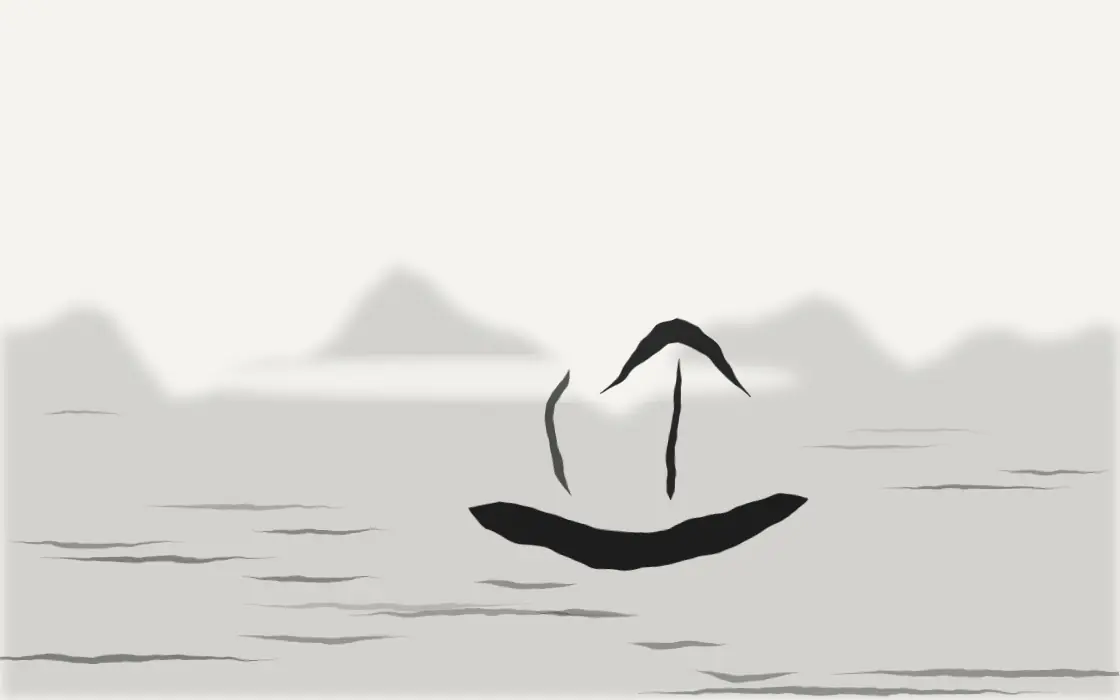
Đăng stopped and watched an old man carrying two baskets of stones towards the riverbank, his face resigned and sad. After a while the old man came back up, and Đăng stepped over, greeted him and asked:
- Sir, may I ask what you are carrying these stones for? Why is nobody helping, so that you have to do it alone?
The old man looked into the distance and said: - I carry the stones to block the current from striking the bank, which wears it away and makes the riverbank and the road along it collapse. If the road collapses, people will find it hard to get across; if the bank erodes, the villagers lose their fields.
- Ah, you do voluntary work. But why don't you ask anyone to help? Well, today I'll give up my outing and help you.
The two of them, one old and one young, carried stones to patch the riverbank.
When the sun was high, they sat down to rest at the foot of a tree by the roadside. Đăng asked curiously again: - Where are your wife and children, sir?
The old man answered sadly: - Because I lived wrongly in the past, everyone left me.
- I see that your heart is very good...
- Now I am only making up for my mistakes.
- Could you explain a little more so that I understand?
- In the past I held that every person has an inviolable right to freedom, that everyone is entitled to a private corner of the sky that others may not interfere with. Because I thought that way, I lived only for myself and did what I wanted, with no concern for the views of my parents, wife and children. I indulged myself, got tattoos, played around idly and said whatever I liked without caring whether it hurt anyone. If I felt like stopping something halfway, I would quit the job; if I felt like travelling, I would drain the family's money and go, without caring what everyone at home would live on.
I worshipped personal freedom to the extreme, so I could no longer love anyone or feel responsible to anyone, to the point that I was about to step onto the road outside the law.
Until one day I had nothing left: the money was gone, my loved ones had left, I had no job. Wherever I stood in front of someone, they turned aside to call a dog over to hug and pet. I had become invisible to everyone. I understood that I had been wrong. Freedom is not the meaning of life. The meaning of life is something else.
I met an old woman who fed me from day to day and taught me how to live again. Privacy is one of the real needs of human beings, but it makes up only 5 per cent of the needs of life as a whole. The other 95 per cent is a person's responsibility to the community and society. We should live freely for ourselves only at a very low proportion, and that is sensible and happy. The rest is responsibility to the family and the community around us.
I made the mistake of raising the proportion of living privately for myself to too high a level, almost 100 per cent, and as a result my life failed and I nearly became a beggar.
After that I worked for hire in the mornings, and in the afternoons I did public-interest work such as picking up rubbish, repairing potholes in the road, and helping wherever I could. I lived like that for 20 years and nobody felt any warmth towards me. Today is the first time a young person has noticed me and helped me carry stones to block the current. Perhaps only now have I regained a tiny bit of merit. The lifestyle of personal freedom robbed me of my life, and luckily I understood and took it back, after several decades.
Đăng said with sympathy: - I don't dare promise anything, but I will help you for the five days of leave I have, and after that I'll decide. You've given me a great lesson. 🧗♂️
Doing what we like is a joy. Sometimes that joy is true happiness; sometimes it is only a commonplace pleasure. If what we like coincides with ethics, then when we finish, we feel happy. If what we like is unethical, then when we finish, we have only a commonplace pleasure.
There have been stages of society when people were forbidden by tyrants from doing the right things they liked; we call these periods of lost freedom. Driven by frustration at this loss of freedom, people made the bourgeois liberal-democratic revolutions.
When they overthrew the monarchy, people were so elated that they praised freedom to the utmost, and this began a transition to another wrong way of living.
Truly, privacy is a legitimate need of every person, but it is reasonable for it to make up only about 5 per cent, not very much. Whoever goes beyond this 5 per cent begins to be cause for concern and may make mistakes without realising. We may ask where this 5 per cent figure comes from. It is just a convention for a very small proportion, not an exact number.
A happy life is not Living for oneself alone but Living responsibly towards the community around us. Living responsibly towards the community is hard, but afterwards there is happiness. Living for oneself alone is easy, but afterwards everything falls apart.
Let us remember the proportion of living for the community versus living for oneself in order to assess a person's level of ethical goodness. A person who reaches the level of forgetting themselves to live for the community is becoming saintly. A person who lives too much by their own likes gradually turns into a demon without realising.
Whatever we do, we should think whether it benefits the community and only then do it. At first it seems restrictive and constraining, but after living like this for a long time we find that it is a whole beautiful art. It is like a beginner at a musical instrument who must play according to the rules, the right technique and the right music theory, which is very constraining. But only when the playing follows music theory can a fine piece of music be played. If one picks up the instrument and bangs away at random with no rules, it is the neighbours' nightmare.
In the same way, living without regard for anyone creates a nightmare for the people around us. Keeping very little privacy so that we can live responsibly towards everyone: that is a very beautiful piece of music.