The depths of consciousness
From Foundations of ethicsAbout 4 min read
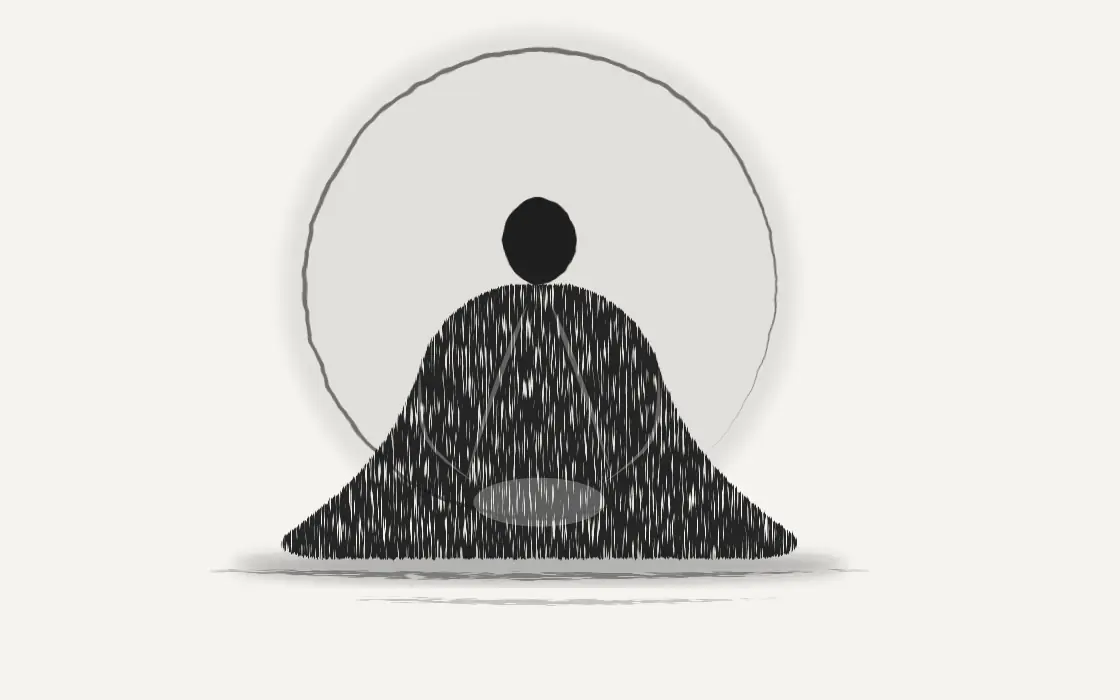
After the meditation sitting, everyone went out to the guest hall to drink tea. Perhaps the flavour of meditation lingered, so everyone was quiet and gentle. A few stood up to say goodbye to Mr Hải and went home; a few stayed. Mr Cảnh spoke first:
- Mr Hải, I've noticed this: on any day when I do some good deed, I find it easier to settle my mind when I sit in meditation that day, without fail. Clearly there is a connection between meditative concentration and meritorious, good deeds. Have you all noticed that?
Mrs Tuyền nodded and said: - I noticed this long ago, so every day I look for a good deed to do. Meritorious, good deeds nourish meditative concentration.
Mr Cảnh said: - I've been coming here to practise meditation for 3 years now, and my mind is also quiet, but why do I still have hidden bad traits that haven't gone? If the mind is quiet, where do the bad traits lie? I keep wondering.
Mr Hải said: - A quiet mind only means the mind has fewer thoughts. Those thoughts are just the surface of consciousness, while the depths still hold many feelings, instincts, tendencies, views and stances that we have stored up for a long time. Anyone who sees that their mind is quiet and becomes complacent is making a mistake, and some day will stumble and commit a bitter fault.
The mind is quiet on the outside, but inside there is still selfishness, lust, greed, competitiveness, wounded pride and all sorts of things. To break the bad traits inside, we have two ways. One is to use good actions to straighten out the inner mind. The other is to use good resolutions to remind ourselves every day. If we keep using these two ways for a long time, the hidden bad traits will gradually lessen.
Only when the bad traits inside have lessened a great deal can we settle the mind into deeper concentration. The state of a quiet mind as at present is just a shallow surface.
Everyone was silent, reflecting. After a while Mr Cảnh said: - Friends, I am a Catholic. When I learned meditation, Mr Hải gave me six principles, and the last principle is to revere those who are capable of deep calm. I revere the Lord, but I don't know how capable of calm the Lord was.
Mr Hải said: - The Gospels tell how Jesus walked on the surface of the sea to visit the apostles who were fishing. How could someone without the ability of deep calm walk on the surface of the water?
There are also other sages, such as Confucius, who calmly played the zither when he and his disciples had nothing to eat for many days in the state of Chen. Socrates stood motionless in absorption through a night. Pythagoras taught his students to calm the mind. Lao Tzu wrote the Tao Te Ching, which reveals an inner calm of the utmost degree. All of them had the power of deep calm, and we should revere them.
Mrs Tuyền nodded and then asked: - So who was Mr Hải's teacher?
Mr Hải smiled and replied: - I've told this story a hundred times and nobody believes it; they keep saying I'm hiding my teacher. I went for a rest in the countryside and by chance met a friend named Minh who taught me to calm the mind. For several long years I kept going back and forth to study with him. On my last visit, he and the house had vanished, literally. Nobody among the people around knew anything.
- That sounds just like a legend.
- It is as it is; I say it without adding or subtracting a bit. I miss him very much, but I don't know where to look. 🧘♂️

Calming the mind and ethics are closely related. The more ethical a person is, the more easily they calm the mind. The more able a person is to calm the mind, the more easily they achieve ethics.
A mind that has temporarily stopped thinking has not necessarily changed its ethics, because ethics lie in the deep layers of consciousness. We must calm the mind and train ethics side by side to understand what our own mind is really like. We ourselves do not really understand our own minds yet.
Calming the mind upgrades humankind to a new level, not through some gene mutation. People will become more saintly and more intelligent, all of it thanks to calming the mind. Whoever now tries to practise calming the mind is leading humankind towards a bright future.
The sooner many people know how to calm the mind, the sooner this world will become peaceful, happy and harmonious for all.