Moving practice
From Qigong as the foundation of meditationAbout 6 min read
Moving practice means the qigong postures that involve moving the body, arms and legs. There are very many moving postures in different qigong schools. The postures presented below are those taught by the Phật Quang Zen school; they may be somewhat similar to those found here and there, or differ a little here and there, which is normal. Whoever has an affinity with a particular school should practise with that school, so long as they keep the ethics of no-self so that there is no competing or dividing.
However, when we practise the moving postures, we must follow the exact technique of that method and not mix it up differently, which can be dangerous.
- Flying practice (Phi hành công)
It is called flying practice because in the old days martial arts masters made their disciples practise this very thoroughly before letting them practise jumping high; it is very much like squats given to students as a punishment.
Stand with the feet wider than the shoulders.
Put both hands on the waist.
Always keep the back vertical, even when going up and down in the stance.
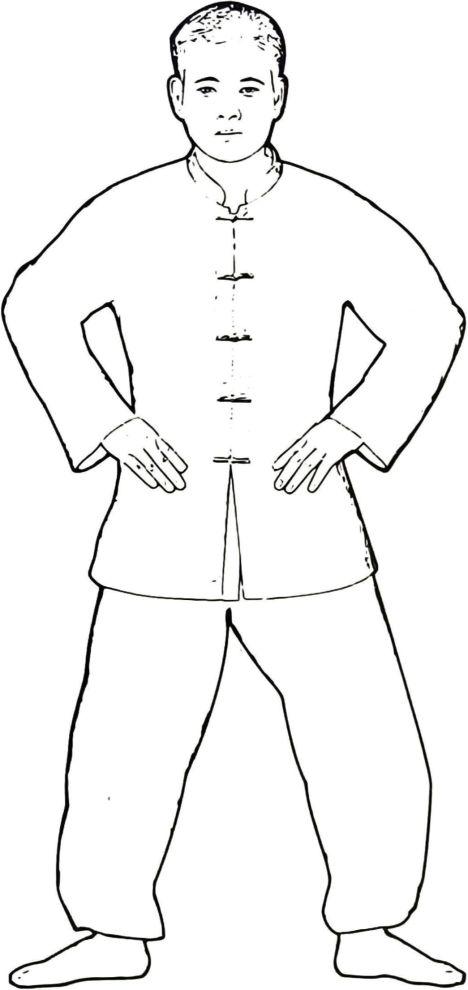
- Breathe in and lower the stance, keeping the back vertical.
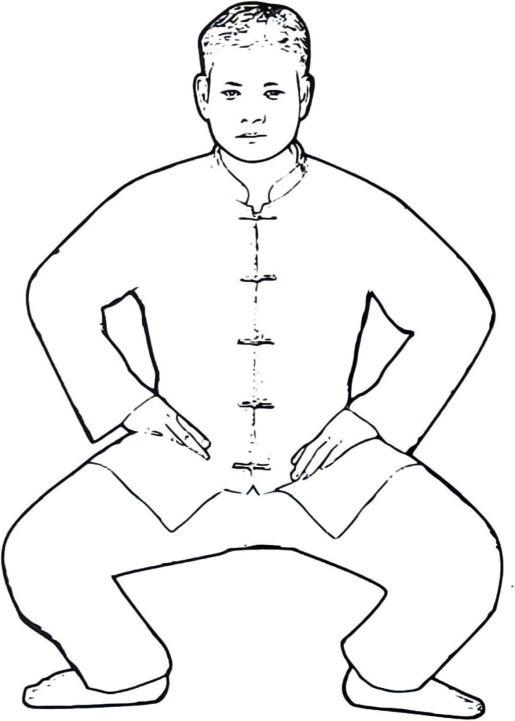
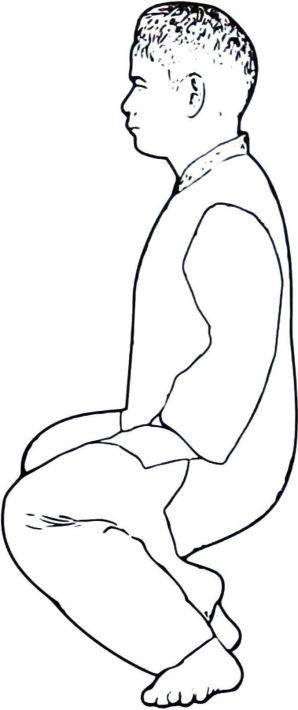
Hold the breath, bob a few times, then stand upright.
Stand still and breathe out slowly through the mouth, counting.
Then breathe in and lower the stance again, keeping the back vertical, and continue in this way.
Done correctly, you never feel tired. The basic inner strength begins to stir in the body. The more you can practise, the better, with no limit.
- Qi-absorbing practice (Nạp khí công)
This posture lets energy soak through the whole body and activates the meridians. Before practising martial arts, this qi-absorbing practice alone is enough as a warm-up.
Stand with the feet shoulder-width apart.
Let the arms hang down normally.
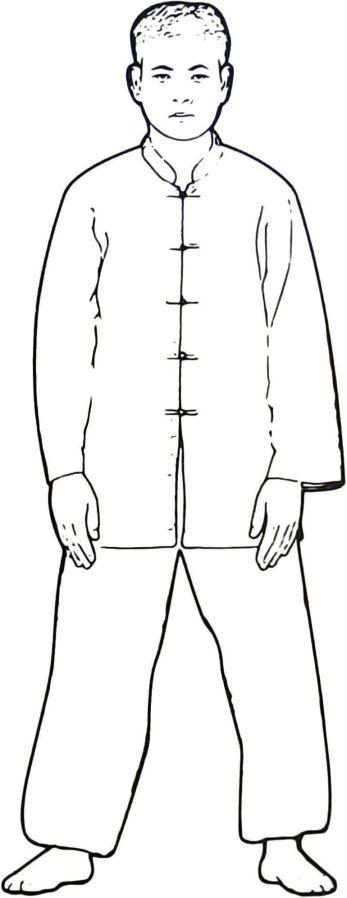 Begin breathing in and rise onto the toes (also called standing on tiptoe), at the same time sweeping both arms wide to the sides and up above the head until they touch lightly there.
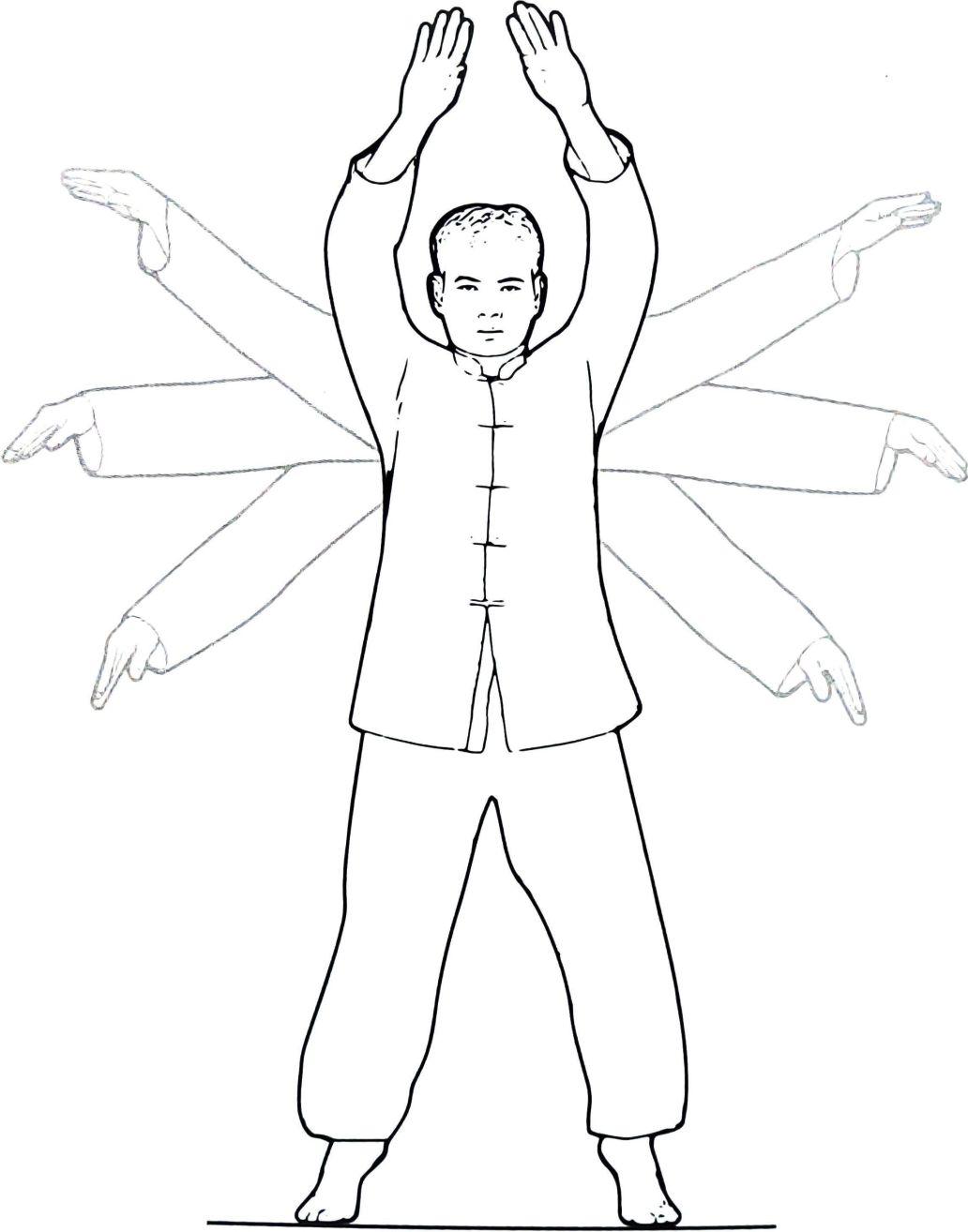
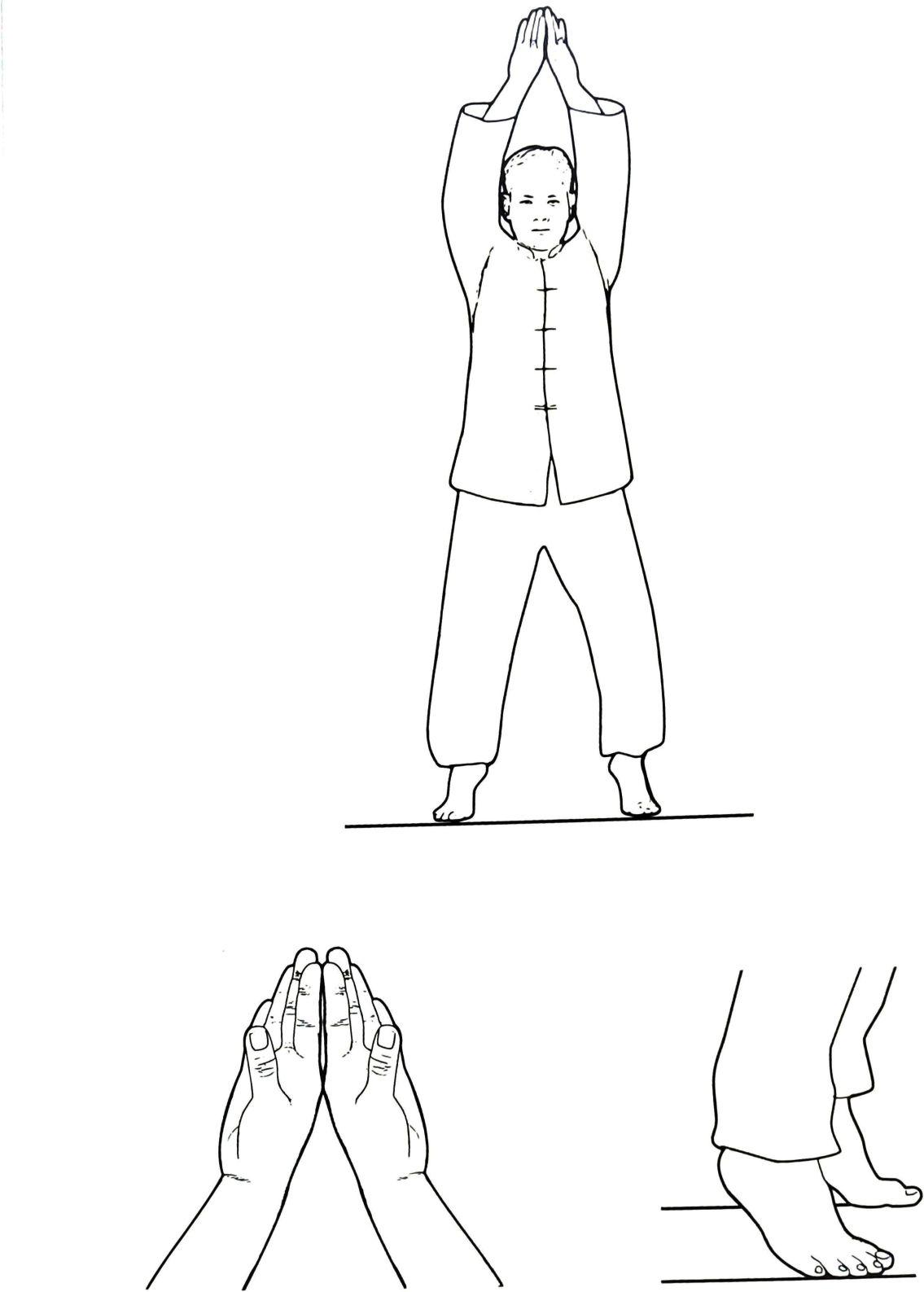
Hold the breath for a few seconds.
Breathe out slowly through the mouth, at the same time opening the arms wide to the sides and lowering them, and touching each other for a moment in front of the belly.
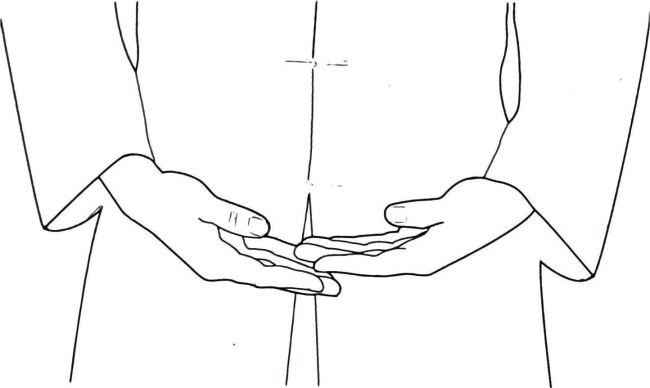
Then breathe in again, rise onto the toes, sweep both arms wide to the sides and up above the head to touch lightly there for a moment.
Then hold the breath for a few seconds.
Then breathe out slowly through the mouth, lowering the arms wide to the sides to meet in front of the belly for a moment.
Practise this qi-absorbing practice for about 5 or 10 minutes. Remember that any moving posture makes us clearly aware, and when we are clearly aware we must remember that the body is impermanent, the mind is ever-changing, nothing is me; let go of wandering thoughts.
- Hand-swinging practice (Phất thủ công)
This is the way of swinging the arms from the Yijin Jing (Sinew Transformation Classic), which activates the meridians and acupoints, accumulates inner strength, and prepares the suppleness for training in martial arts.
Stand upright with the feet shoulder-width apart.
Breathe in and swing the arms backward.
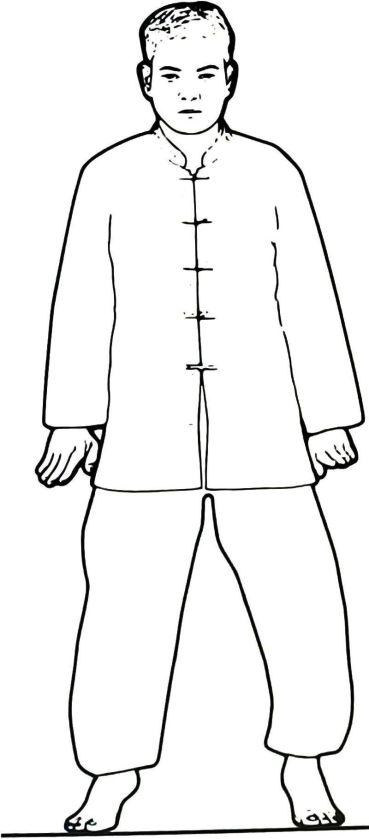
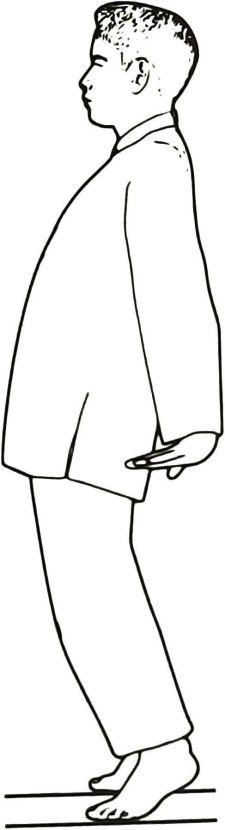
Breathe out and swing both arms forward, but raise the arms only to waist level; do not raise them to the chest.
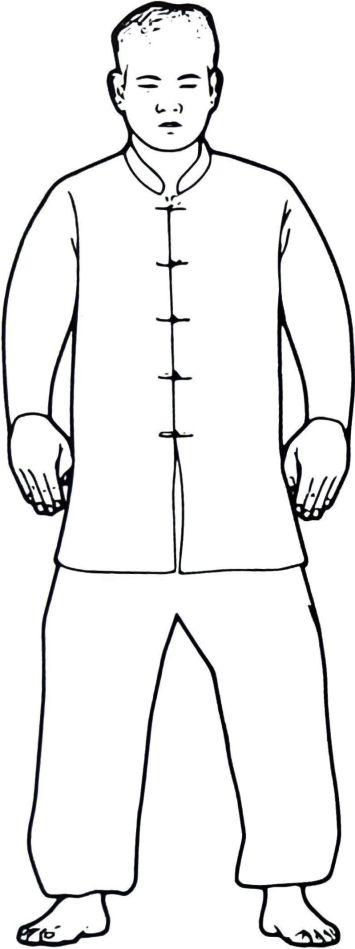
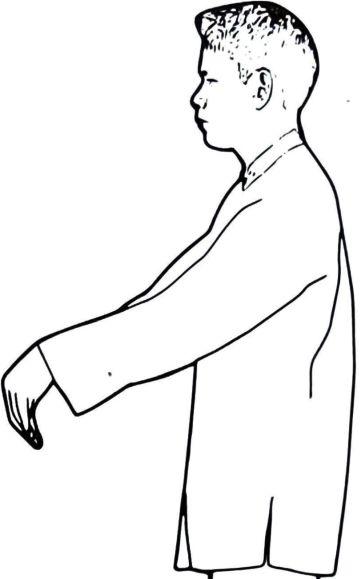
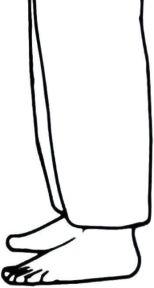
Breathing in, rise onto the toes; breathing out, lower the feet.
Breathing in, turn the palms face down as the arms swing backward.
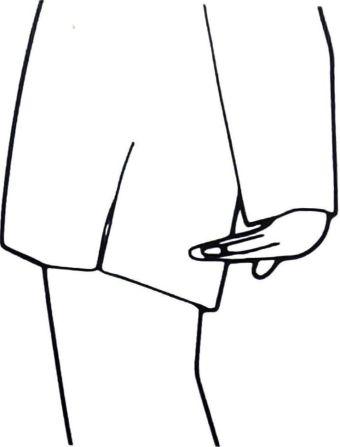
Breathing out, hook the palms upward as the arms swing forward.
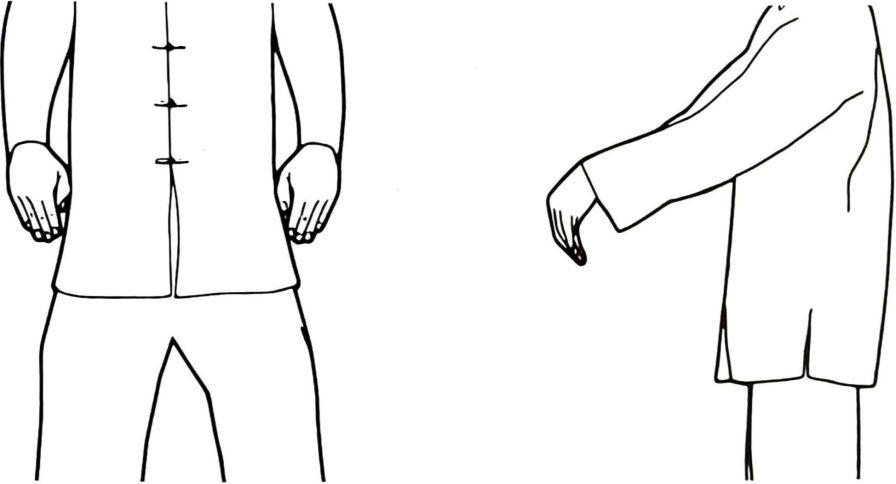
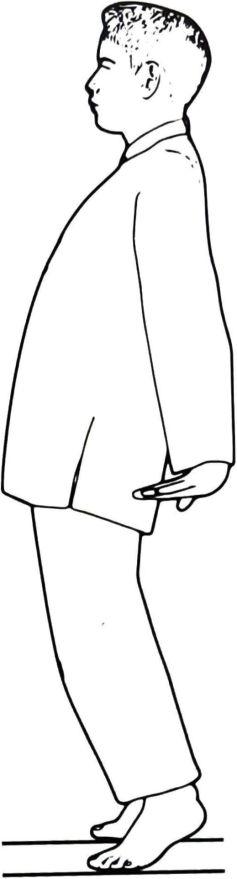
Breathing in, arch the body gently like a bow; breathing out, let the body straighten as before. Remember to form a curve from the feet to the head, evenly curved like a bow drawn only slightly taut.
Breathe in through the nose and breathe out slowly through the mouth.
Breathing in, remember that this body is impermanent; breathing out, remember that this body is impermanent.
With this posture the breath gradually becomes heavier, the body feels comfortable and pleasant, and one never tires of practising it.
Later, when you are used to it, after breathing in, when the body is arched like a bow, stay still and hold the breath for a few seconds.
 Dragon palm practice (Long chưởng công)
This posture trains the energy to travel from the arms to the fingertips, so that later it can be released in striking.
Feet wider than the shoulders, lowering the stance slightly.
Both palms face up to the sky, held at belly level.
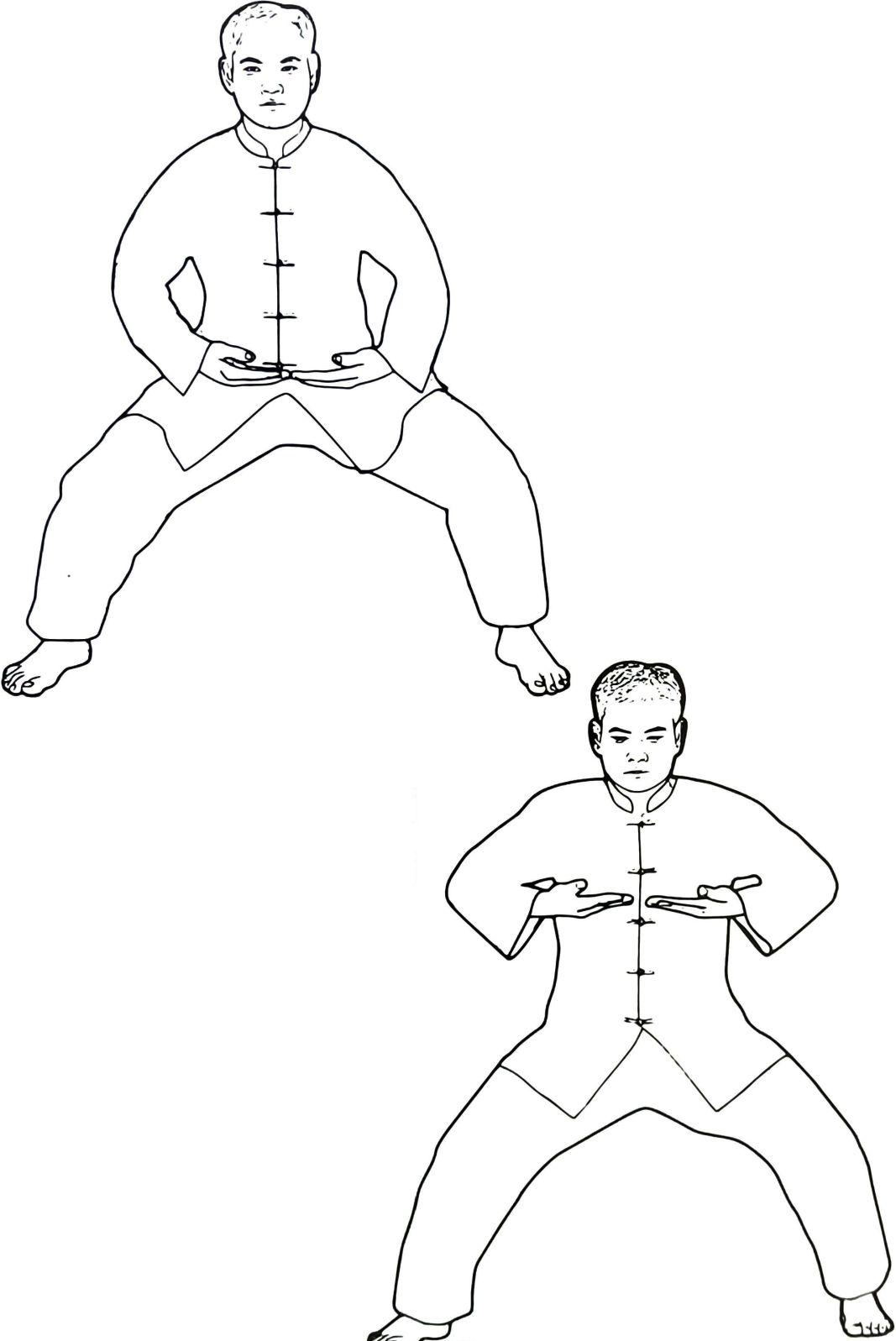 Breathing in, raise both palms to chest level.
Holding the breath, at the same moment intend to press the breath down into the lower abdomen, turn and push both palms forward, raise both elbows out to the sides to the height of the palms, and press the breath out into both palms and the fingers. Hold the breath and stay still for a while, with the belly full of breath and both palms full of breath (without tensing the muscles).
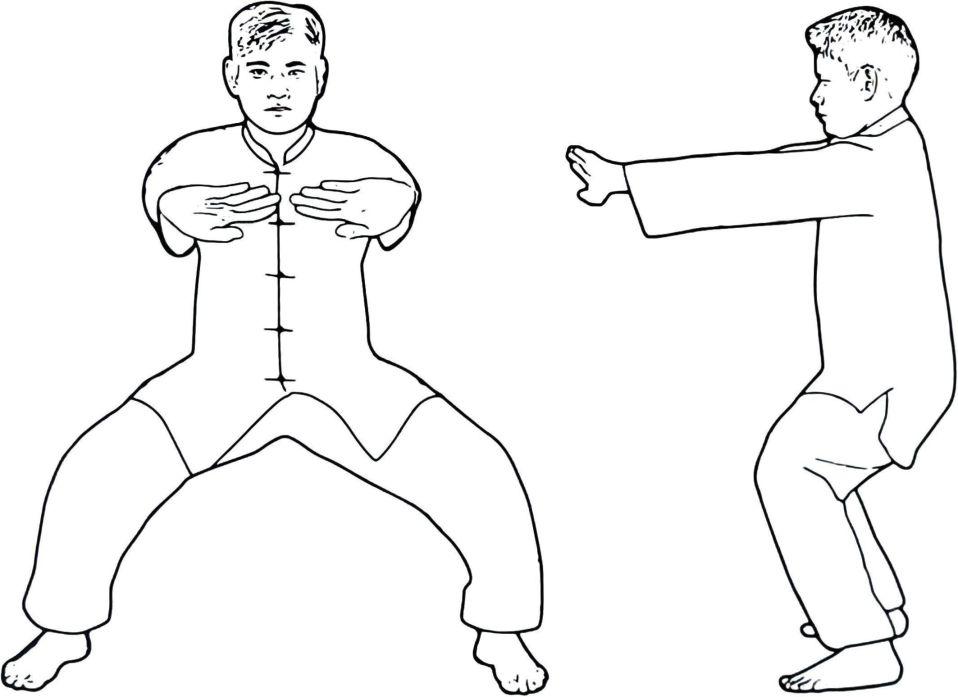
- Breathe out slowly through the mouth while both palms turn face up to the sky and lower to below the belly as before.
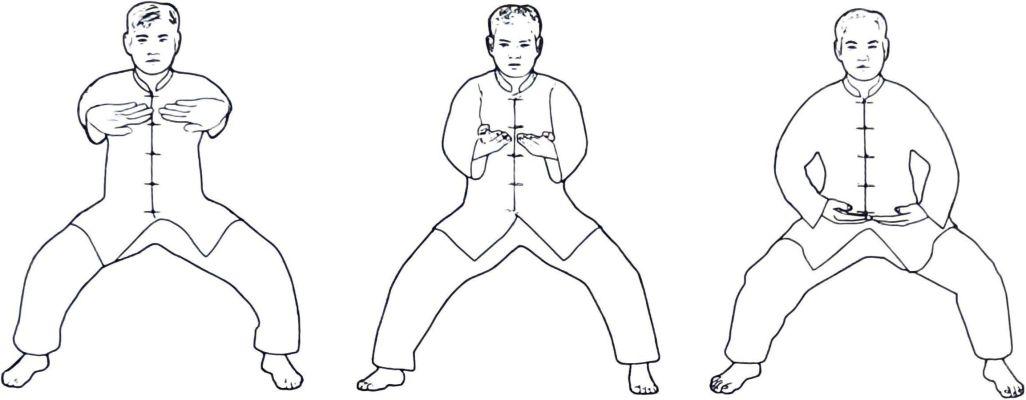
Then breathe in again, raising both palms to the chest.
Then hold the breath again, press the breath into the belly, push both hands forward and press the breath into both palms.
Then breathe out slowly through the mouth again, lowering both hands with the palms facing up to the sky.
- Iron body practice (Thiết thân công)
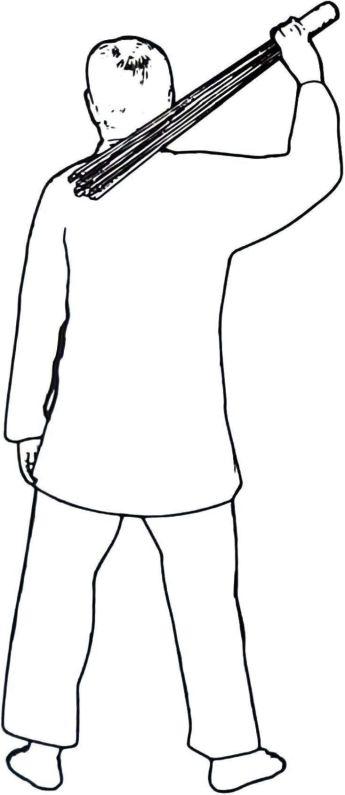
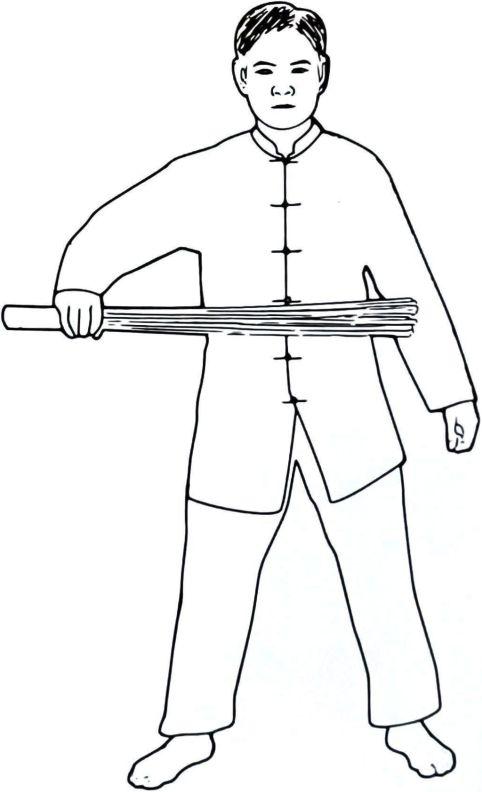
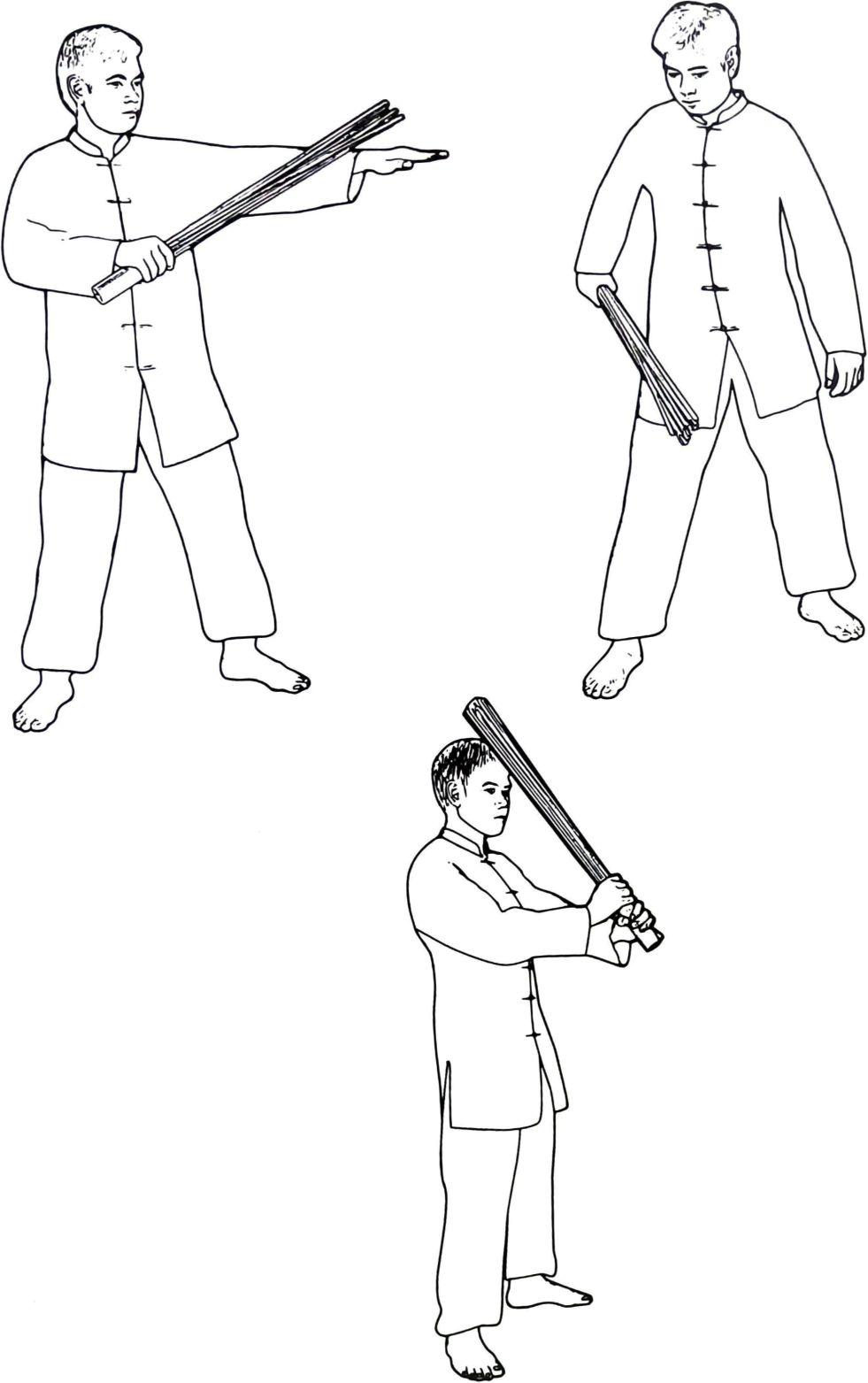
Take stainless steel rods or smooth split bamboo canes, bind them into a bundle that fits the fist and has enough weight.
Use this bundle of canes to strike your own body, or ask someone to strike you.
Each time it hits the body, hold the breath to take the blow. After a few blows, breathe out slowly. Breathe in, hold the breath, and strike again.
Strike the back, strike the belly, switch hands to strike the arms, strike the legs, strike the neck, strike the head.
- Composure practice (Thản công)
- Men use a pair of 3 kg dumbbells; women use a pair of 2 kg dumbbells.
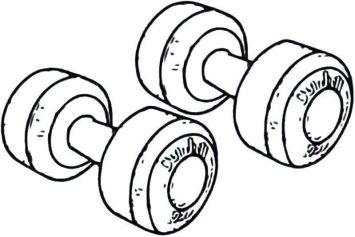
- Stand with the feet shoulder-width apart, hold the dumbbells with the arms hanging down beside the legs, palms turned forward.
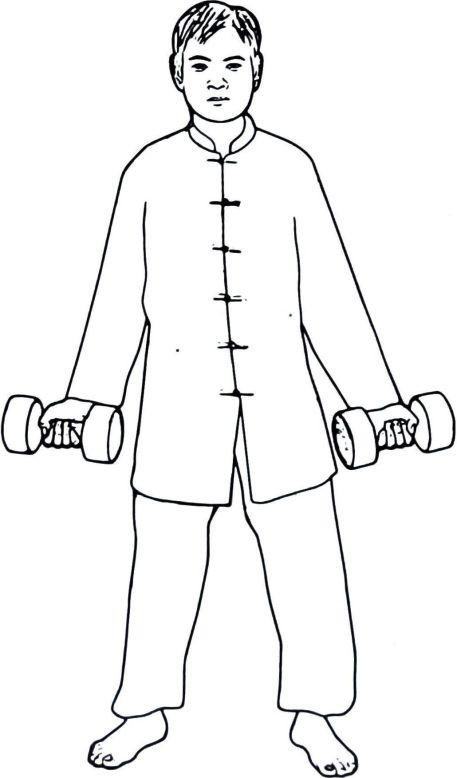
- Jump up while breathing in, pulling the dumbbells up to the chest.
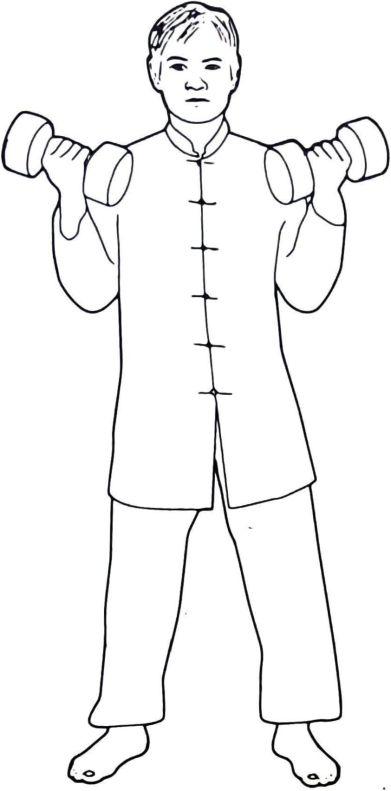
Land while breathing out, lowering the dumbbells beside the legs as before.
Continue like this: jump up breathing in and pull the dumbbells up; land breathing out and lower the dumbbells.
This method makes a person resilient and strengthens the whole body.
- Light-body practice (Khinh công)
- Squat, with both hands holding both big toes.
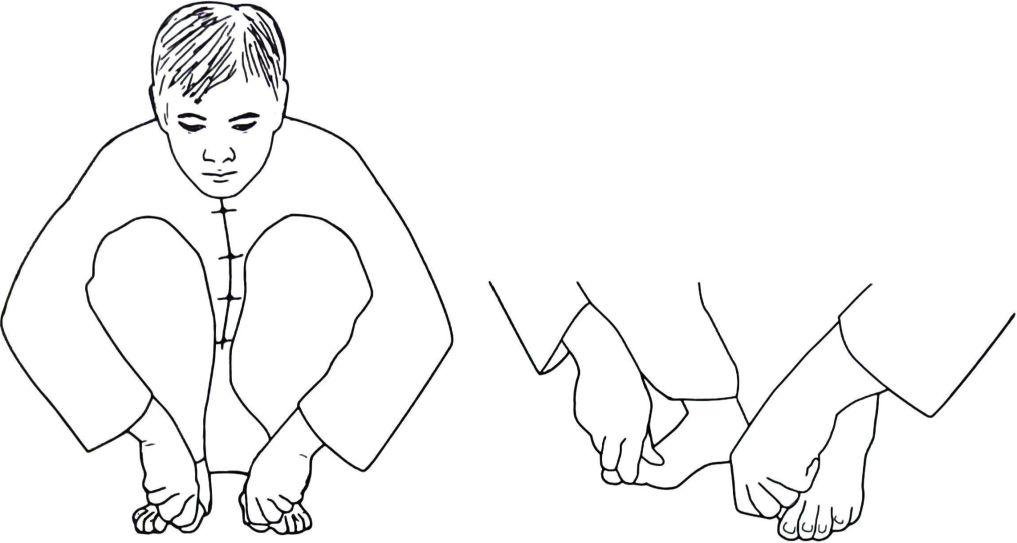
- Breathing in, jump forward once.
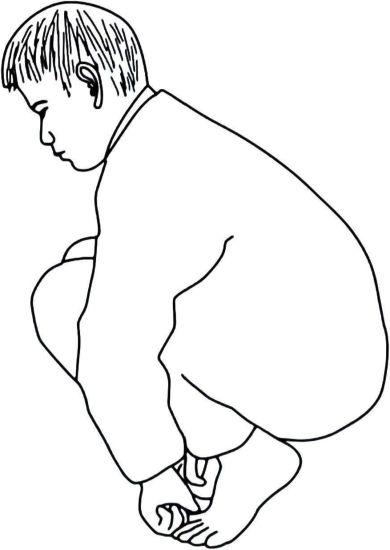
After jumping, sit still and breathe out slowly through the mouth.
Then breathe in and jump forward once more, then sit still and breathe out slowly again.
Practise this frog jump on a mat, so that the skin of the hands does not get scraped from rubbing on the ground while holding the big toes.
Try to jump by throwing the body upward, rather than lifting the buttocks high to gain momentum.
These seven moving postures also help the practitioner gradually accumulate energy for the day when the energy is fully attained. Remember that practising moving practice like this brings clear awareness, and as soon as there is clear awareness we must remind ourselves: this body is impermanent, this mind is ever-changing, in the end nothing is me. In this way we gradually move from qigong to meditative concentration.