Applied practice
From Qigong as the foundation of meditationAbout 5 min read
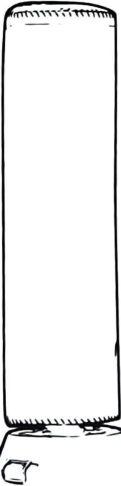
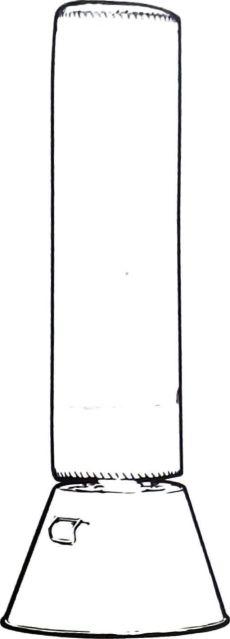
Applied practice is training to release power so as to deliver a real strike. This part has stepped fully into martial arts, yet it is bound up with the whole of Buddhist qigong and so cannot be cut out. Even if the practitioner does not practise martial arts, they should practise this applied part so as to complete the set of qigong exercises, and then it is easier to attain qi. For this part you need a sandbag, of the proper standard kind with only sawdust and scrap cloth pressed tightly inside.
- Mountain-pushing fist practice (Thôi sơn quyền công)
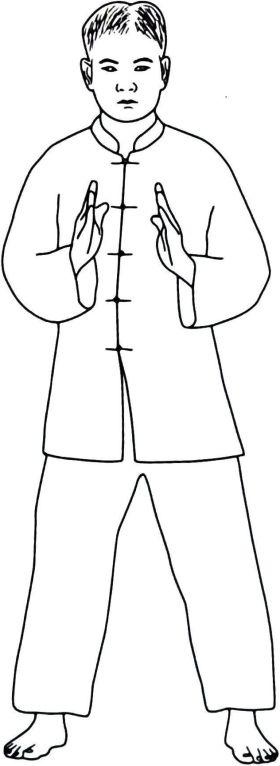
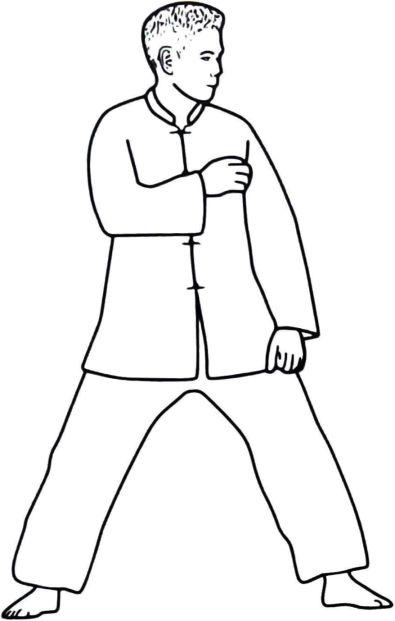
Stand upright with the feet shoulder-width apart.
The two palms are almost pressed together but not quite, still about 15 cm apart.
- Breathe in quickly, with the breath going down to the belly very quickly, and punch the sandbag very quickly with a clenched fist.
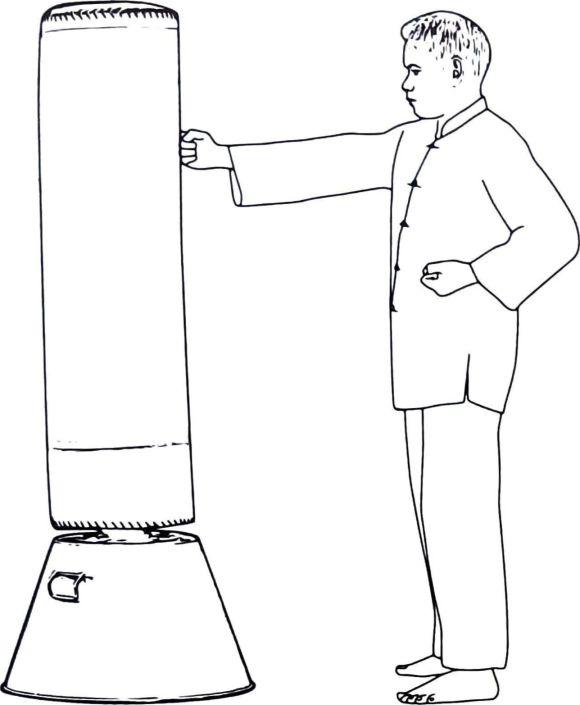
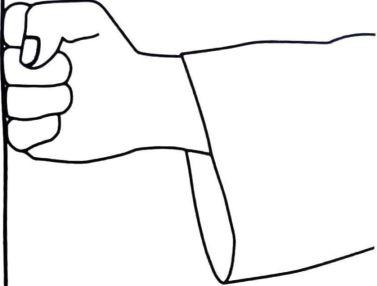
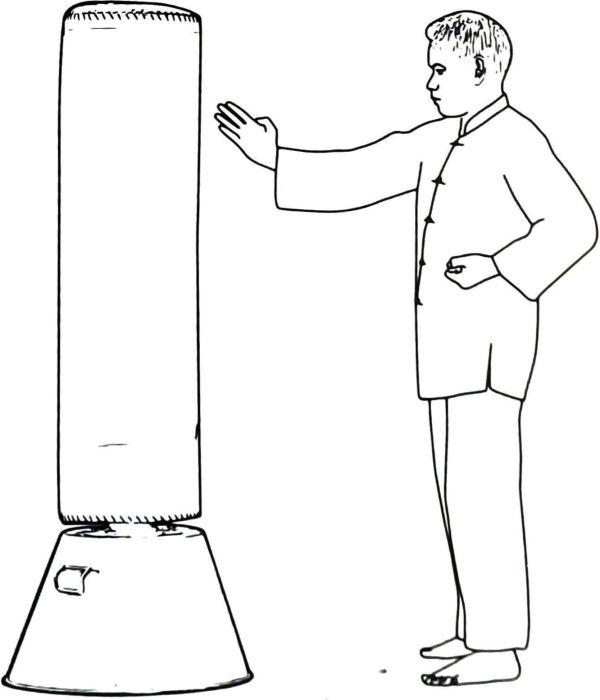
Just as the fist is about to touch the sandbag, hold the breath; that is, you may touch the sandbag only while holding the breath.
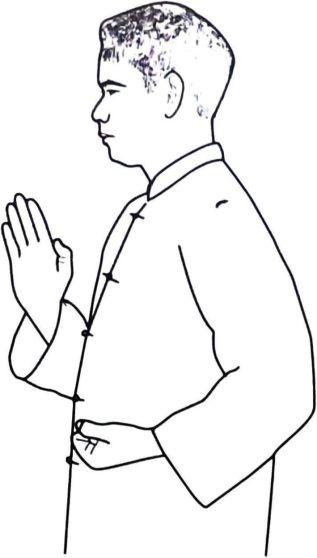
Breathe out slowly through the mouth, which is also drawing the hand back slowly to the chest, but with the hand opened and held upright, like a monk greeting a guest.
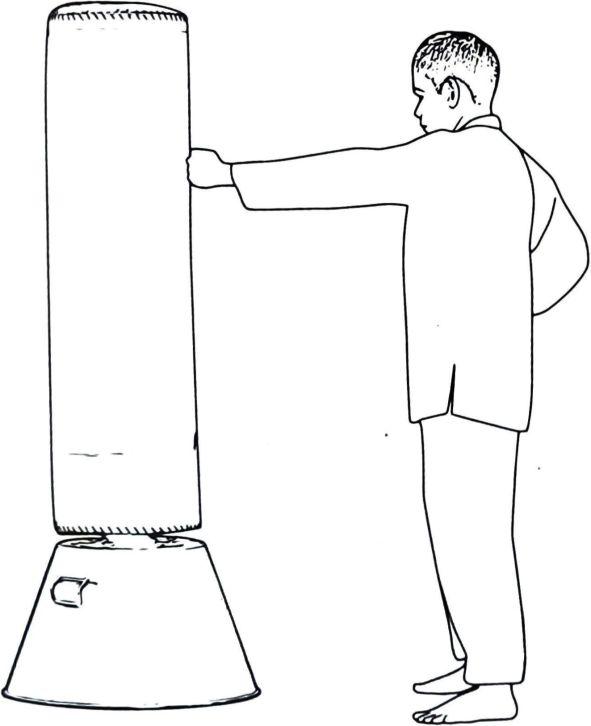
Then suddenly breathe in to the belly very quickly, and it is the other hand's turn to punch the sandbag very quickly.
Only while holding the breath may you hit the sandbag hard.
Breathe out slowly through the mouth, open the hand and draw it upright in front of the chest as if offering a greeting.
The practitioner must clearly see that the punch comes out stronger than usual for it to be correct. In the first few days the shoulder blades and upper arms hurt a little, but this passes within a week; do not stop. When you are used to it, the force gradually gathers only in the fist, while the whole arm still seems loose and light.
If you do not yet have a sandbag, you can punch the air, but you must also imagine a sandbag so as to know the point at which to stop, hold the breath and strike hard.
- Wondrous kick practice (Diệu cước công)
This posture trains the release of a strong kick; the principle is the same as the mountain-pushing fist practice.
- Stand with one foot in front of the other, facing the sandbag.
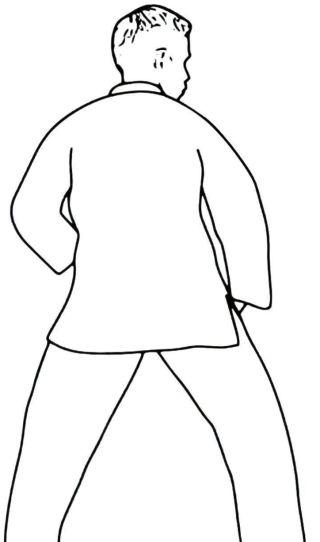
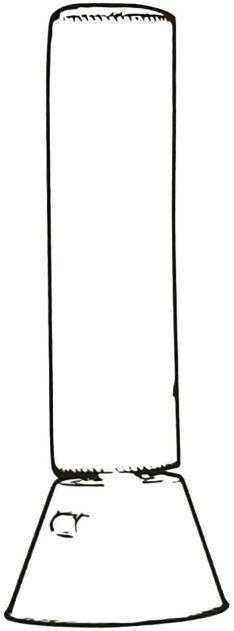
- Breathe in to the lower abdomen very quickly, and at the same time kick the sandbag with the back foot very quickly and very hard.
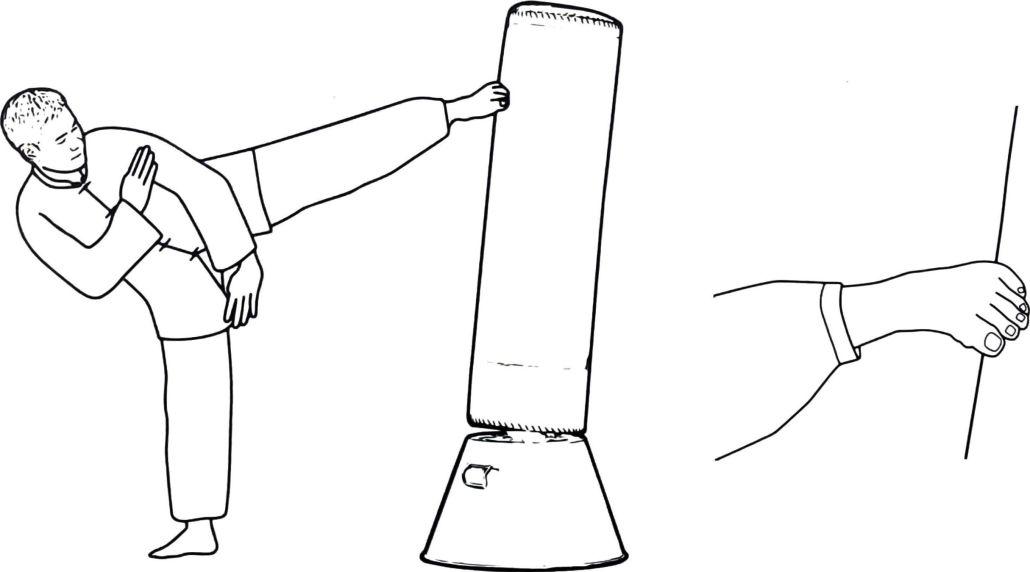
Hold the breath so that the edge of the foot strikes the sandbag hard (the side-dragon kick, Bàng long cước).
Keep holding the breath as the foot comes down.
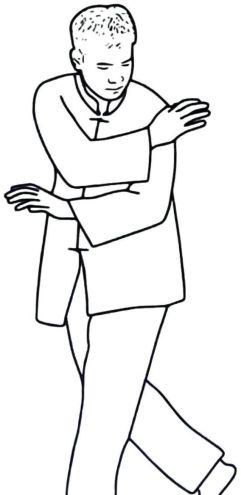
- Swap the front and back feet compared with the start.
Stand perfectly still and breathe out slowly through the mouth.
Then breathe in to the belly very quickly, fling the back leg and kick the sandbag very quickly.
Hold the breath so that the edge of the foot strikes the sandbag (the side-dragon kick).
Keep holding the breath as the foot comes down, and swap the front and back feet.
Stand perfectly still and breathe out slowly.
The practitioner must clearly see that their kick is stronger than usual for it to be correct. With long practice the power gradually grows.
- Flying foot practice (Phi hành túc công)
This posture is training for jumping high. In families with the time, they have their children spend a great deal of time on this flying foot practice in order to leap through the air, but we practise only to support inner strength for meditative concentration, and do not dare set the goal of flying like that.
- The practitioner stands in front of a high (solid) step, or a stack of several layers of 2 cm thick martial arts mats will do. Start with a step of about 40 cm; do not be greedy for more in a hurry.
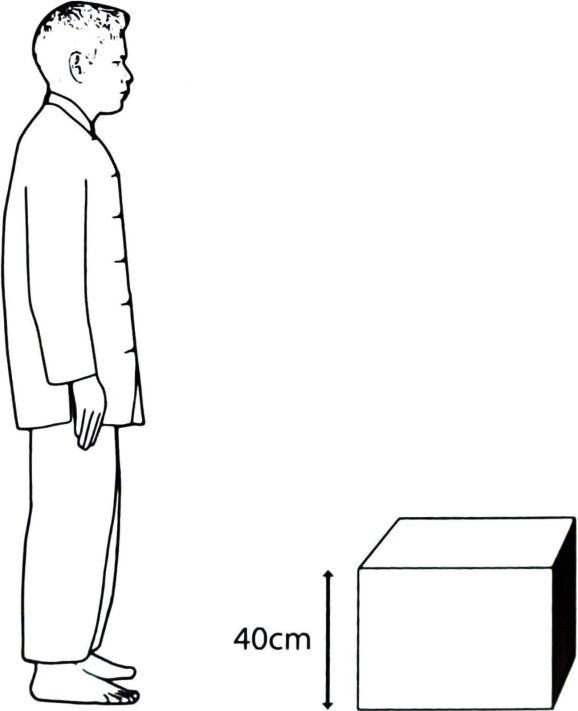
- Breathe in very quickly, hold the breath, and spring up onto that high step.
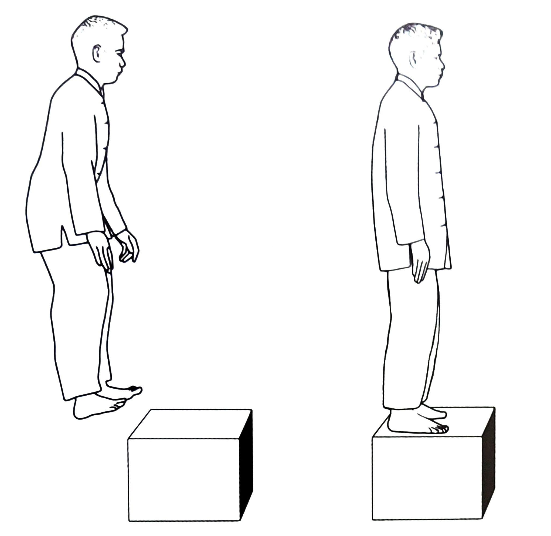
It is correct if you jump onto the step with the body still straight, the legs not much bent, and the sensation of the body jumping up lightly.
Keep holding the breath, jump back down to the ground, stand still and breathe out slowly through the mouth.
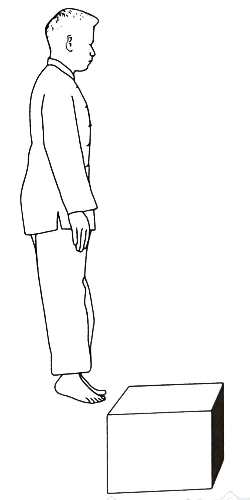
Then breathe in very quickly, hold the breath, and jump onto the high step.
Then jump back down again, stand still and breathe out slowly through the mouth.
You can combine hand-swinging practice with flying foot practice as follows: stand and swing the arms three times, then jump once.
Practise until you jump up with a really light sensation, then raise the step by another 2 cm; do not be greedy and raise it by a lot in a hurry. Raising it by 2 cm at a time is enough, as long as the legs are not much bent when you jump.
An older person who can practise this flying foot practice holds old age at bay, because when the legs are weak, old age arrives very fast. An older person who can practise flying jumps like this is wrestling with ageing.
CONCLUSION
The methods of practising qigong are countless across the different schools. The main aim of the qigong postures above is to support the practice of meditative concentration, because qigong is always the foundation of meditation. Many meditation methods have qigong built in, but not thoroughly. This Buddhist qigong offers three parts of qigong, still practice, moving practice and applied practice, so that practitioners can practise qigong thoroughly with peace of mind and without hesitation. These three parts of qigong are also a link for practitioners who want to train further in martial arts effectively.
Qigong supports meditation, qigong also supports martial arts, and qigong also supports health.
We should understand that one attains qi first, then attains meditation, and only after attaining meditation attains the fruits of the sages.
Just as in the path, one attains the precepts first, then attains concentration, and only after attaining concentration attains wisdom.
The sign of attaining qi is that, in still practice, you feel the body becoming bright and steady, you can sit in meditation longer and longer, and in daily life you work with stamina and do not know tiredness. Great qigong masters can attain qi to the point of making the body hard as stone, able to withstand heavy blows, even sharp objects stabbing and cutting.
In the path, the sign of attaining the precepts is having a pure and exemplary way of life, and a mind that firmly rejects mistakes and defilements.
Someone who has the foundation of attained precepts in their practice and the foundation of attained qi in their training already has two firm foundations for long-term meditative concentration.
May you all succeed in your practice.